By Christabel Obi-Nwosu, MTSU Student
About Me
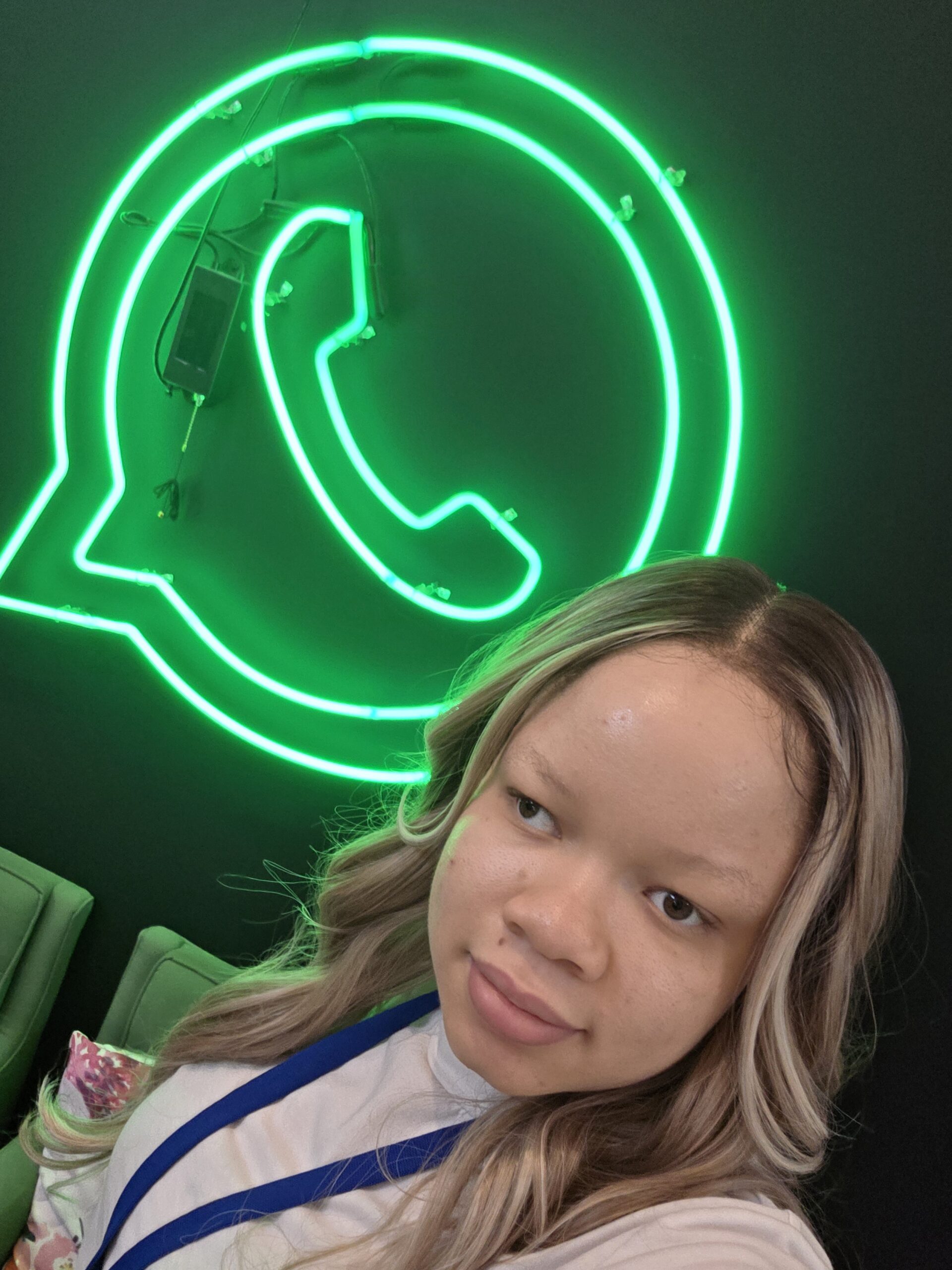
My name is Christabel Obi-Nwosu, and I am a senior Computer Science major with a minor in Data Science at Middle Tennessee State University (MTSU), graduating in December 2026. I am an international student from Nigeria, currently residing in Murfreesboro, Tennessee.
Outside the classroom, I am deeply involved in student organizations, and I truly encourage every student to join clubs because they build leadership skills, teamwork, and genuine relationships with professors and professionals that will serve you far beyond graduation. I am the incoming President of the MTSU ACM (Association for Computing Machinery) chapter, a previous President of the Data Science Club and still an active member, a member of Women in STEM (previously serving as Officer/Treasurer), a member of the African Student Organization, and more.
An interesting fact about me: I am passionate about learning new languages. I currently speak four languages and am actively learning American Sign Language, Korean, and Spanish. When I am not coding or studying, you will find me reading books, it is one of the ways I decompress and explore new perspectives.
Why Data Science & How I Secured This Internship
I am drawn to Data Science because of the tangible impact it creates in the real world. The idea that proper data analysis can power targeted advertising, detect harm before it reaches users, or identify patterns invisible to the human eye, that intrigues me. It makes me feel like my work adds genuine value to people’s lives at scale.
As for how I secured my internship at Meta: I was intentional and proactive. The moment Meta’s Software Engineering Internship posting dropped, I applied within 24 hours, not a week later. But applying alone was not the full strategy. I had already been leveraging LinkedIn to connect with recruiters and engineers at Meta months before. When the application went live, I immediately informed the recruiter I had been in contact with that I had submitted my application. That combination, speed, preparation, and relationship-building made the difference. Use your connections and LinkedIn. Do not wait for opportunities to come to you; position yourself so that when they appear, you are already in the conversation. Never forget you are not in this alone, so many people are very much willing to help.

My Role & What I Built
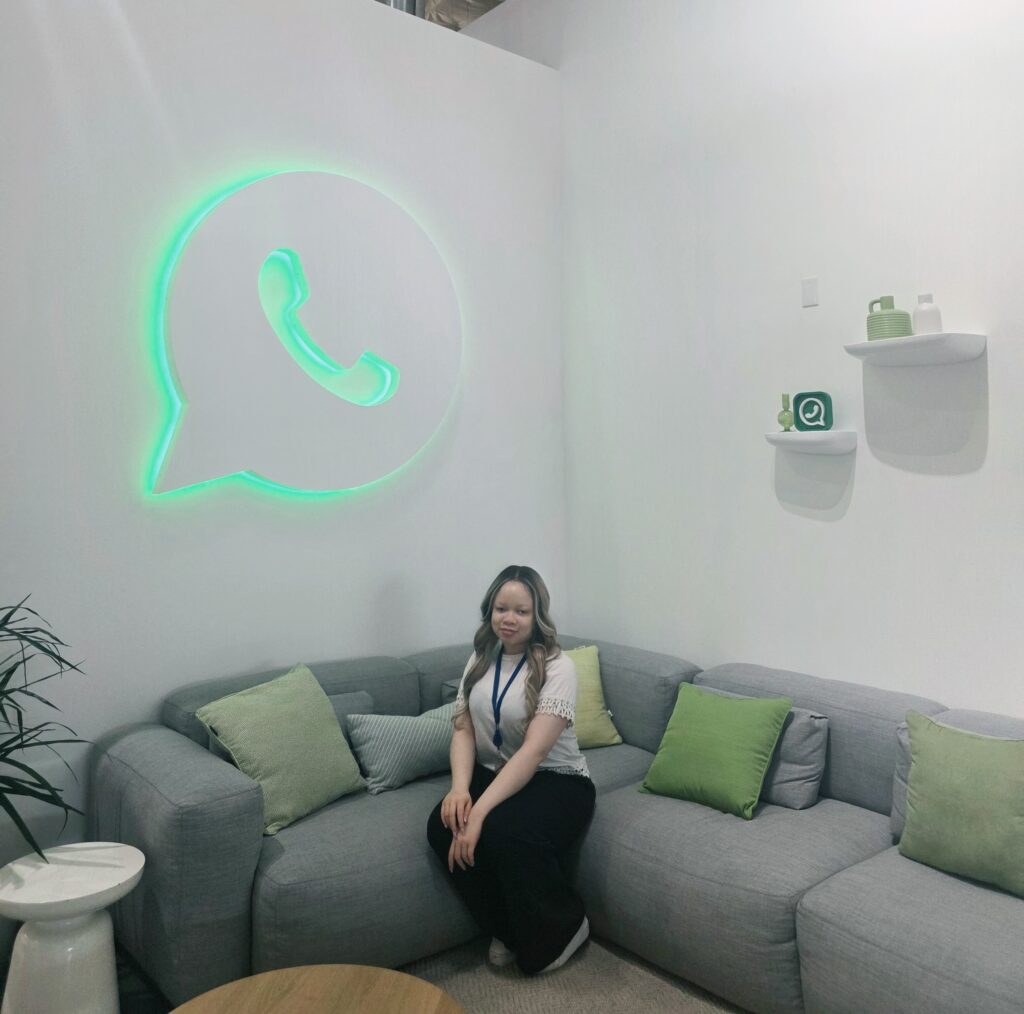
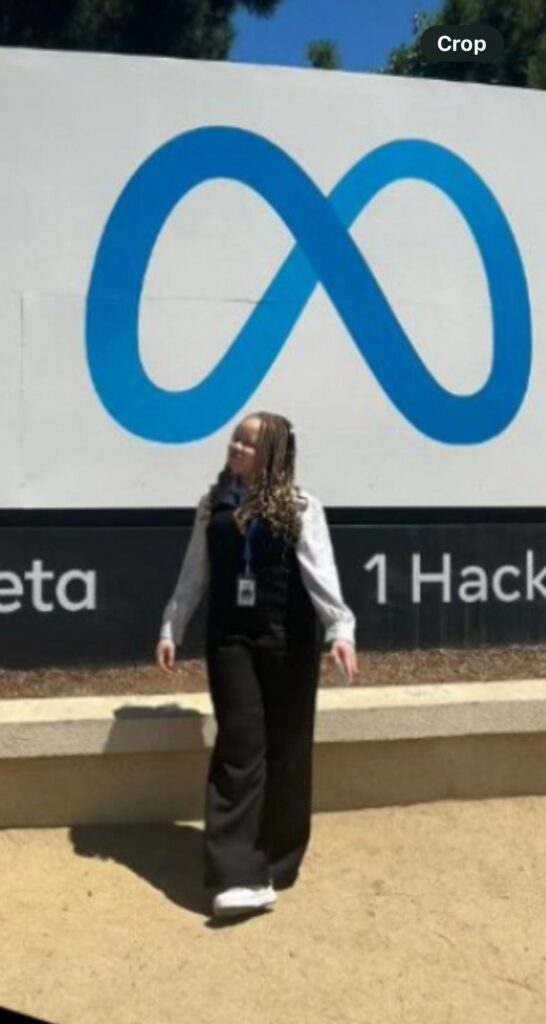
This summer, I worked as a Software Engineering Intern on a Business Integrity team at Meta, based in Menlo Park, California. My project focused on building an automated system that protects the WhatsApp Business ecosystem.
For context: WhatsApp connects over 2 billion users with more than 200 million businesses. Many of these businesses connect to the platform through third-party partners who help them onboard and manage their messaging. When a partner has poor practices, the businesses they manage can send harmful content to users at scale.
Before my project, detecting and responding to these issues was a largely manual process. I built an end-to-end automated system spanning four areas:
- Detection: I created real-time monitoring infrastructure that continuously tracks partner health signals, like how many of their businesses get flagged or removed from the platform.
- Assessment: I built scoring algorithms that automatically compute a partner health grade and classify them into severity tiers.
- Enforcement: I designed and implemented graduated, proportional responses that automatically apply restrictions based on the severity detected ensuring the response matches the problem.
- Transparency: I built an API and user interface that gives partners visibility into their own health status for the first time, creating a feedback loop that encourages improvement rather than simply restricting access.
I worked across the full stack, backend systems, the Machine Learning platform, API development, and frontend development, delivering over 50 code changes across 5 project phases over the course of the summer.
Three Key Takeaways & Career Impact
1. Real-world systems require end-to-end thinking. In school, you build isolated components. At Meta, I had to think about how every piece connects, from a platform event occurring, to data updating, to an algorithm scoring, to an action executing, to a user interface rendering. Owning a system end-to-end taught me to think in pipelines, not just functions.
2. Product thinking matters as much as code. My manager emphasized that the systems I built should be designed as a product, not just a backend mechanism. That reframing changed how I approached every design decision, focusing on proportionality, fairness, and user feedback loops rather than just “detect and block.”
3. Collaboration and communication are non-negotiable. Working across policy teams, infrastructure engineers, and product managers taught me that the best technical solution means nothing if you cannot communicate it clearly and align stakeholders. The skills I built in my student organizations, presenting, leading, coordinating, directly transferred to this professional environment.
Career impact: This internship solidified my goal to work at the intersection of data systems and platform safety. I want to build intelligent systems that protect users at scale while maintaining fairness, and now I have the hands-on experience to pursue that path with confidence.
Advice for Future Students
Apply early and apply deliberately. When a role drops, submit within 24 hours. Recruiters often review applications in waves, being early puts you in the first wave, not the last.
Leverage LinkedIn before you need it. Do not wait until application season to build connections. Reach out to recruiters, engineers, and alumni at companies you admire months in advance. When the time comes, you are not a cold applicant; you’re someone they have already spoken with.
Join student organizations seriously. I know it sounds like generic advice, but being President of ACM and the Data Science Club gave me leadership experience, presentation skills, and professional relationships that directly translated to confidence in my internship. Employers notice involvement, and the skills transfer more than you expect.
Complete an internship if you possibly can. Coursework teaches you theory. An internship teaches you how real systems are built, with ambiguity, tradeoffs, collaboration, and scale that no classroom can replicate. The gap between “I learned this in class” and “I shipped this at a company serving billions of users” is enormous, and it is the kind of growth that accelerates your entire career.
Technical & Professional Skills Gained
Technical skills improved:
- Full-stack development at production scale (backend, API, and frontend)
- Real-time data analysis on business data
- Designing event-driven architectures and real-time data pipelines
- Writing scoring and classification algorithms with configurable parameters
- End-to-end testing in complex environments
- Working within a large codebase alongside thousands of engineers
Tools and languages used:
- Languages: PHP (backend), JavaScript/React (frontend), GraphQL (API layer), Python.
- Concepts: Event-driven architecture, real-time data pipelines, feature gating, automated testing
- Workflow: Code review systems, feature flagging for safe rollouts, real-time analytics dashboards
What surprised me: The scale of collaboration. My project touched systems owned by multiple teams and required coordination with policy analysts, product managers, and senior engineers. Engineering at this level is as much about communication and alignment as it is about writing code. I also didn’t expect how much my leadership experience in student organizations would directly apply, running meetings, presenting technical decisions, and aligning different perspectives felt very familiar.
This internship was completed as part of my Summer 2026 CPT through Middle Tennessee State University’s Computer & Data Science program.