A Simulation Characterizing Out-of-the-Box Stock Trading Behavior of Various LLMs

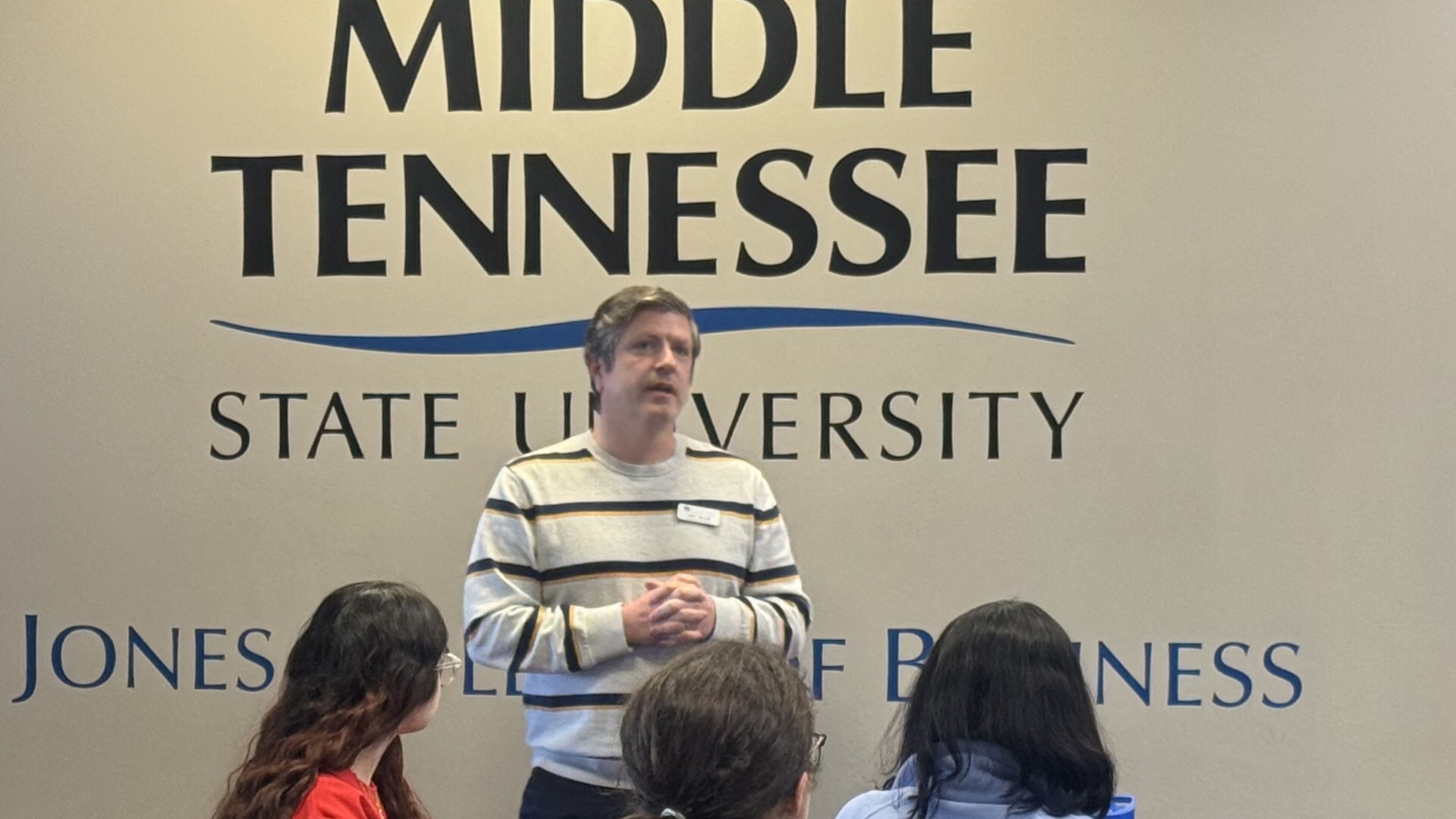
Dr. Sal Barbosa, from MTSU’s Department of Computer Science, discusses the behavior of LLM in the analysis of financial markets.

The intersection of artificial intelligence and finance has led to a surge of interest as Large Language Models (LLMs) have come on the scene and promise to automate decision-making in many tasks, including stock trading. However, each model, shaped by distinct training data, architectures, and design philosophies, exhibits specific strengths and weaknesses in its decision-making behavior, thereby influencing its performance on the trading task. Therefore, understanding the “personality” of individual LLMs is crucial to ensuring that the “right” model is chosen as the basis for stock trading agents and assistants. This research is a comparative analysis of the trading behavior and performance of five LLMs (llama3.2, mistral, gemma3, phi4, and qwen2.5), and sheds light on the unique characteristics and idiosyncrasies of each model. The experiments, in a custom simulation framework, analyze stock buy and sell trades/recommendations and measure the frequency of various errors, assessing their impact on performance. The experimental design employs these models as released for use in Ollama, via a common prompt and without fine-tuning or retrieval-augmented generation (RAG), and assesses their performance through multiple trials, over trading periods in both rising and declining market conditions. The return on investment is compared across models, and between market conditions, the “personality” of each model is characterized through a set of metrics, and the number and types of errors made by the LLMs are contrasted. The results of this investigation inform the choice of models as agents for automated stock trading/recommendation and create a path for future research in this rapidly evolving area. 

Watch the discussion here.

Faculty and Staff Spotlight – Emmanuel Nkansah, PhD

Dr. Nkansah joined MTSU in 2024.

DATA classes taught: DATA 1500, DATA 2025, DATA 3500, DATA 6320, DATA 6300, DATA 6310, DATA 6330

Home Department: Department of Economics and Finance

Research Interests: Econometrics (Time Series), Financial Machine Learning, Machine Labor (Joshua D. Angrist), Labor and Development Economics

Why pursue data science:

Data Science isn’t just for computer experts — it’s for anyone curious about solving problems with data. Whether you’re in business, engineering, social sciences, or already studying Data Science, learning to analyze and interpret data gives you skills that are in demand and can create real-world impact.

One piece of advice for data science students:

The tech world never stands still — it keeps evolving, especially with the rise of AI transforming everything we do. My advice to you is this: never stop learning. Stay curious, stay hungry for knowledge, and keep exploring new ideas and technologies. The job market today is wide and ever-changing. Employers seek passionate, talented, and curious minds who can adapt and grow. At MTSU, the rigorous training from your Data Science classes has given you a strong foundation to succeed. Don’t wait until you finish school — start applying for internships and full-time opportunities after your first or second semester.

Hobbies outside of work: I enjoy playing and watching soccer, including MLS and EPL matches, as well as following the NBA. I like reading books about successful people in various industries, hiking, and playing ping pong. I also value spending quality time with my family.

Fun Fact: The Christmas season always brings me joy. It’s a time that reminds me of God’s deep love for humanity, and I cherish the warmth, reflection, and celebration it brings.

Big Data and Large Scale Computing Challenges

Dr. Henrique Momm from the Department of Geosciences will discuss some of the challenges driving Geoscience research. The talk will explore hydrological and environmental modeling and their application to geospatial data.

Geosciences are undergoing a revolution, driven by massive, high-resolution datasets that fundamentally change how we study the Earth. This presentation will describe key datasets currently being used in hydrological and environmental modeling. We will highlight the need for advanced feature extraction research devised for conversion of raw geospatial data into actionable information. Practical examples will demonstrate this process, including the automated identification of conservation practices and the characterization of ephemeral gullies. Additionally, further research is needed in methods to apply legacy hydrological models, originally designed for field- and watershed-scale, to large-scale national-level assessments. Similarly, we need to enhance legacy models, originally based on empirical formulation, to take advantage of modern numeric solutions. Examples of past research involving hydrological modeling will be provided, highlighting opportunities for graduate-level research. Check out the discussion below.

Predicting Workers’ Compensation Dispute Outcomes with Large Language Models

Dr. Vajira Manathunga from MTSU’s Department of Mathematical Sciences talks about some of his work on applying LLM’s in actuarial science. His work compares the results from LLM to NLP pipelines.

Workers’ compensation insurance is one of the oldest social insurance programs in the United States, predating both Social Security and unemployment insurance. When disputes arise between employees and employers over benefit entitlements, most states require resolution through administrative boards. In this study, we evaluate whether large language models (LLMs) can predict the outcomes of workers’ compensation cases more accurately than traditional, domain-specific natural language processing (NLP) techniques under the zero-shot learning paradigm. We compare performance under two input scenarios using only the initial “Issues” filed and using the full “Finding of Facts” narrative of each case, and measure predictive accuracy against actual board decisions. Our results show that, with access to a sufficiently large context window, LLMs match or surpass the performance of specialized NLP pipelines, despite having no task-specific training on workers’ compensation data. This finding underscores the practical utility of LLMs for case outcomes for the plaintiff, the employer, actuaries and the insurance carrier.

Click here for the discussion.

Real-time Edge Computing for Autonomous Systems

Dr. Junlin Ou from MTSU’s Department of Engineering Technology presents a series of studies on real-time edge computing for autonomous systems, focusing on algorithmic development and hardware implementation for intelligent robotic applications.

The research encompasses indoor positioning, path planning, and real-time decision-making in dynamic environments. A recent highlight is the development of a GPU-enabled evolutionary dynamic programming (EDP) algorithm that formulates path planning as a Markov decision process and integrates parallel optimization on edge devices such as the Jetson AGX Xavier. This approach enables rapid re-planning and robust navigation in environments with moving obstacles, achieving path updates at a rate of approximately 0.1 seconds/path. Together, these efforts demonstrate how combining algorithmic innovation with edge computing hardware can significantly enhance the autonomy, adaptability, and computational efficiency of robotic systems operating in real-world, dynamic conditions. See the video here.

MTSU Launches New Undergraduate Certificate in Using Artificial Intelligence 

Data Science at Middle Tennessee State University is excited to announce the launch of a forward-looking undergraduate certificate: Using Artificial Intelligence (AI). Designed for students eager to explore the transformative power of AI, this 10-credit hour program provides hands-on experience and practical skills that will serve students across a wide range of disciplines and career paths. 

As artificial intelligence becomes increasingly integrated into every corner of industry—from healthcare and finance to marketing and education—the need for professionals who can understand, apply, and critically evaluate AI tools has never been greater. This certificate provides students with a foundational knowledge and the ability to implement AI ethically and responsibly. Students will complete three foundational courses: 

  • CSCI 1150 – Computer Orientation 
  • DATA 1010 – Artificial Intelligence in Action 
  • DATA 1500 – Introduction to Data Science 


The Using Artificial Intelligence certificate is a smart addition to any major, enhancing a student’s resume with cutting-edge knowledge and cross-disciplinary relevance. It’s also ideal for students who want to explore AI without committing to a full degree in computer science or data science. With just 10 credit hours required, it’s a manageable and impactful way to gain high-demand skills that open doors to internships, research opportunities, and careers.  

Whether you’re preparing for graduate study, entering the workforce, or simply curious about the technologies shaping the future, this certificate offers a meaningful path to understanding and applying AI in today’s data-driven world. 

Ready to learn more? Contact your advisor or visit the MTSU Data Science website to see how you can enroll in the Using Artificial Intelligence certificate and join the next generation of AI-literate professionals. 

Modeling the Impact of Host Heterogeneity on the Dynamics of a West Nile Virus Epidemic

MTSU Computational and Data Science student, Paul Klockenkemper’s work explores approaches for moldeling complex dynamic systems using ODE.

West Nile Virus (WNV) is a mosquito-borne arbovirus with significant ecological and public health implications. It is maintained primarily through a transmission cycle involving avian hosts and mosquito vectors. Host diversity, competence, and demographics, as well as mosquito population dynamics, may shape epidemic patterns. In this study, we extend previous mathematical models by incorporating multiple bird host types, host recruitment and mortality, horizontal transmission among birds, and mosquito life cycle dynamics, including vertical transmission. Check out the study here.

Faculty and Staff Spotlight – Meet Dr. Keith Gamble

Dr. Keith Gamble is the Weatherford Chair of Excellence Chairperson and a Professor of Finance in the Jones College of Business.

Year joined MTSU: 2016 

Data Science Involvement at MTSU 

Dr. Gamble leads the MTSU AI Initiative. He developed DATA 1010- Artificial Intelligence in Action 

Why Data Science? 

Before the phrase “data science” was used, Dr. Gamble was trained as an empirical economist using data to make inferences regarding human behavior. When asked, he stated that “I pursued data science to learn new tools and techniques for generating insights from data.” 

Advice for Students 

“Make a habit of learning new ways to do things you are interested in.” 

Research & Academic Interests 

Dr. Gamble’s research interests are financial decision making and artificial intelligence. 

Outside of Work 

Whan not at the University, Dr. Gamble’s interest are sports and travel.  

Fun Fact 

“I live with ghosts. [My home, originally built in 1830, was a field hospital during the Battle of Stones River. Of course, that means I live with ghosts.]” 

HPE HGT Hybrid Positional Enoding for Enhanced Structural Awareness in Heterogenous Graph Transform

MTSU Computational and Data Science Ph. D. student Nada Srour presents some of her work that explores approaches for optimizing heterogeneous neural networks in machine learning. Heterogeneous graph neural networks (HGNNs) are critical for modeling multi-relational data in domains such as recommender systems, biological networks, cybersecurity, and citation analysis. These graphs encode diverse node and edge types, capturing complex semantic interactions that demand expressive and type-aware representation learning. While recent graph transformer-based architectures have advanced this goal by leveraging attention over typed meta-paths, their effectiveness remains constrained by a fundamental limitation: an overemphasis on semantic structure at the expense of global topological awareness. To overcome this gap, we introduce HPE-HGT, a novel hybrid positional encoding-based heterogeneous graph transformer that integrates both local semantic and global structural signals into the attention process.

Watch the webinar here.

Statistical and Deep Learning Approaches to Network and Sequential Data

Dr. Ramchandra Rimal, Department of Mathematics, will briefly discuss research that synthesizes advanced statistical network modeling and deep learning (DL) to analyze complex datasets in financial and medical domains. We’ll begin by exploring the theoretical foundations of statistical network analysis, including the Popularity Adjusted Block Model (PABM) and Sparse Subspace Clustering (SSC), for enhanced community detection in heterogeneous networks. We will then transition to the application of various DL architectures for sequential data modeling. The talk will conclude by highlighting the fundamental trade-off between maximizing model precision and maintaining interpretability, which is a common challenge across the fields.

Click here for the discussion.