Computational and Data Science Ph.D. student Abigail Kelly presents elements from her internship and research. Her research focuses on Geospatial Data and Graph Theory – specifically, how to extract patterns from this difficult type of data.
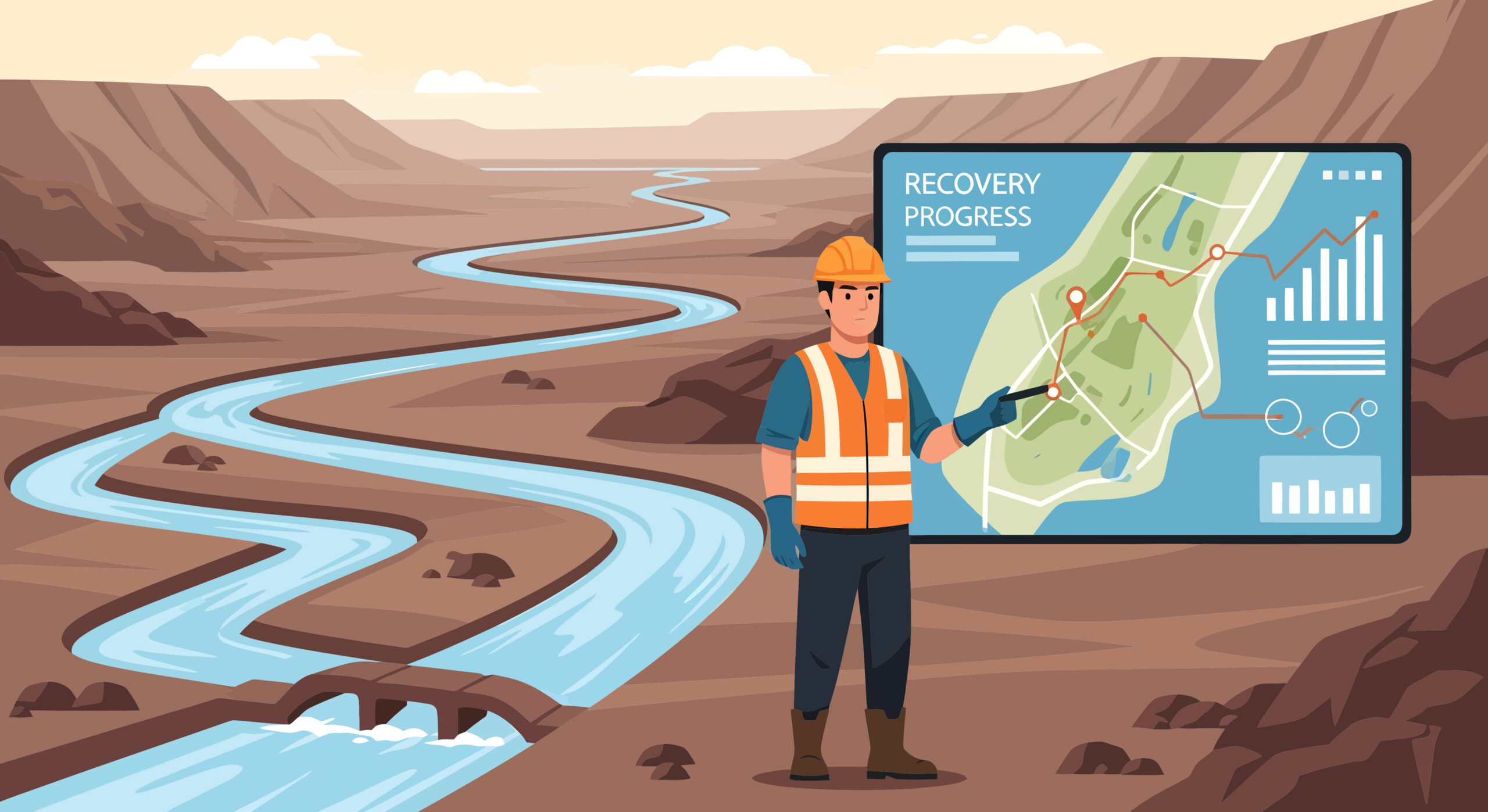
Geospatial data science focuses on extracting patterns and knowledge from data containing a spatial or geographic component. This discipline is integral to diverse fields, including public safety, infrastructure development, environmental science, and public health. For instance, spatial data can identify crime hotspots for public safety, guide business placement for infrastructure development, map species relationships in environmental science, and track disease vectors in public health. Despite its utility, the field faces significant challenges, including spatial autocorrelation, the scale of big data, large memory demands, and high computational complexity. This dissertation proposes novel graph-based techniques to address key computational challenges in geospatial data science. The research first introduces a novel technique for estimating neighborhood distance thresholds in colocation mining. To reduce the memory footprint of spatial analysis, it then presents a memory-efficient regional colocation mining algorithm. Furthermore, the work develops a scalable colocation mining algorithm featuring a tighter upper-bound filter and faster refinement processes. Finally, a livability index is implemented using Graph Neural Networks to address the effects of spatial autocorrelation.